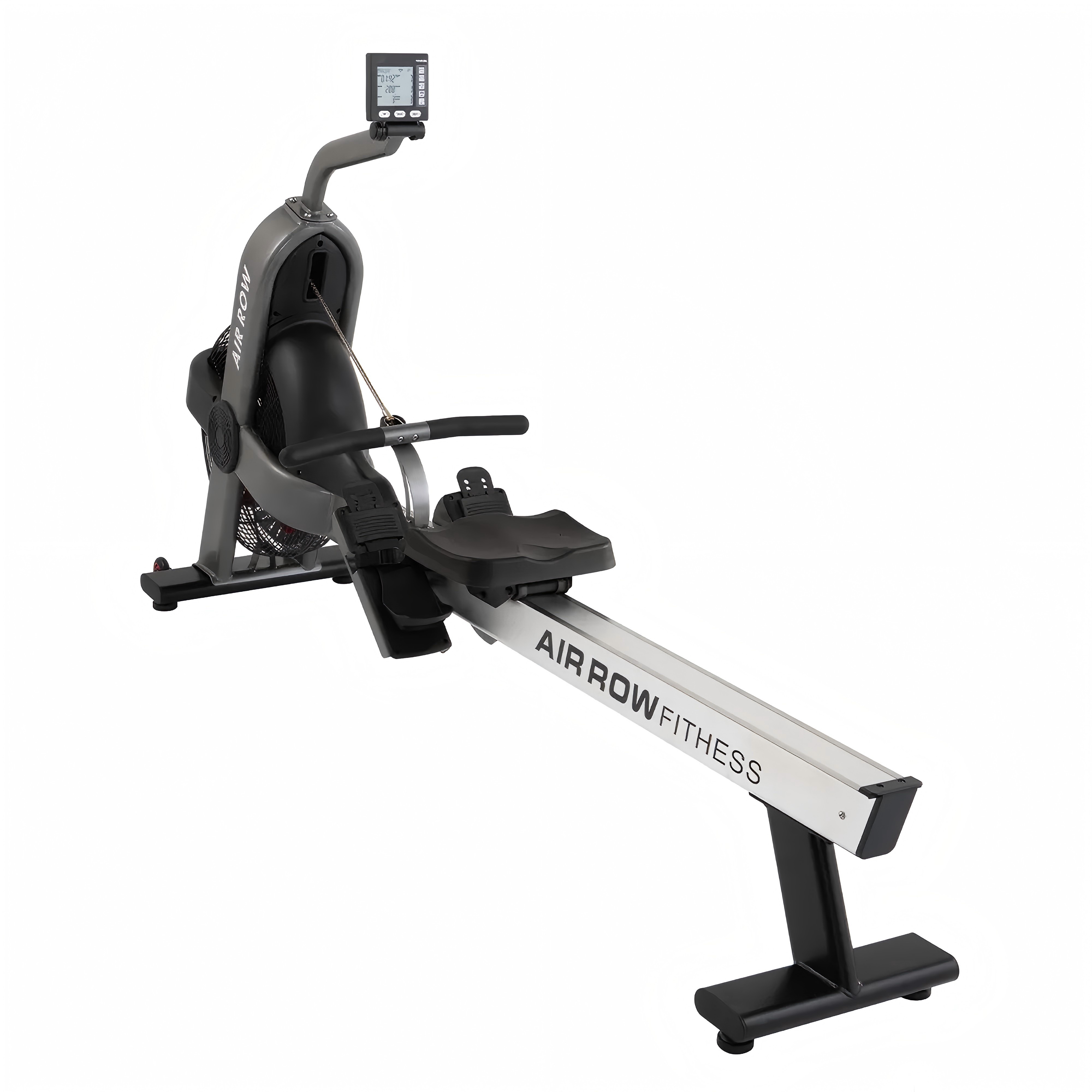
You have set up one of the Best Rowing Machines in your home gym. You strapped your feet in, grabbed the handle, and... now what?
Many users fall into the trap of "mindless rowing"—sliding back and forth at a medium pace for 20 minutes. While this is better than sitting on the couch, it fails to unlock the true potential of the machine. To see changes in your body composition and endurance, you need structure.
The beauty of rowing is its versatility. By simply changing your stroke rate (SPM) and intensity, you can transform the machine from a gentle recovery tool into a high-intensity fat burner.
In this guide, we break down three structured routines designed for Beginner, Intermediate, and Advanced levels.
1. The Beginner Routine: Mastering the "Steady State"
Goal: Form consistency and aerobic base building.
If you are new to rowing, do not worry about speed. Focus on the sequence of the stroke: Legs, Body, Arms... Arms, Body, Legs. This workout is known as LISS (Low-Intensity Steady State).
The 20-Minute Foundation
Time | Activity | Stroke Rate (SPM) | Intensity (RPE 1-10)* |
0:00 - 5:00 | Warm-up | 18 - 20 | 3 (Light) |
5:00 - 8:00 | Steady Row | 20 - 22 | 5 (Conversational) |
8:00 - 10:00 | Active Rest | 18 - 20 | 3 (Light) |
10:00 - 13:00 | Steady Row | 22 - 24 | 6 (Moderate) |
13:00 - 15:00 | Active Rest | 18 - 20 | 3 (Light) |
15:00 - 20:00 | Cool Down | Slow | 2 (Very Light) |
*RPE = Rate of Perceived Exertion. 1 is resting; 10 is maximum effort.
Form Tip: Keep your back straight and core engaged. If you feel pain in your lower back, you are likely leaning too far back at the finish.
2. The Intermediate Routine: The Pyramid
Goal: Endurance and pace control.
Once you are comfortable on the machine, it is time to play with intensity. This "Pyramid" workout forces you to increase your intensity and then control your heart rate as you come back down. It is excellent for calorie burning.
The "Power Pyramid" (Distance Based)
Equipment Check: To handle the shifting intensity of pyramid intervals, you need a stable machine. Our collection of Rowing Machines features heavy-duty rails that won't lift off the ground during your sprints.
3. The Advanced Routine: HIIT (High-Intensity Interval Training)
Goal: Maximize VO2 Max and explosive power.
HIIT is efficient. You can achieve more cardiovascular benefits in 15 minutes of HIIT than in 45 minutes of steady rowing. This workout uses the Tabata style: short bursts of maximum effort followed by short rest.
The "Lung Burner"
Warning: This is intense. Ensure you have a solid fitness base before attempting.
Warm-up (10 mins): Essential to prevent injury. Include some hard pulls to wake up the muscles.
The Work (8 Rounds):
20 Seconds: MAX EFFORT Sprint (Aim for 30+ SPM).
10 Seconds: Complete Rest (Stop moving).
Repeat 8 times (4 minutes total).
Cool Down (5-10 mins): Do not stop abruptly. Paddle slowly to flush out lactic acid.

4. Monitoring Your Progress
How do you know if you are getting fitter? Don't just look at the scale. The monitor on your rower tells the truth.
Split Time (/500m): This is the "speedometer" of rowing. It shows how long it would take to row 500 meters at your current pace. Lower is faster.
Heart Rate: Using a chest strap or smartwatch is the most accurate way to track effort. According to the American Heart Association, effective cardio training occurs when your heart rate is between 50% and 85% of your maximum.
Watts: This measures pure power. If you can pull more watts at the same heart rate, you have become stronger.
5. A Note on Maintenance and Performance
You cannot get a good workout on a machine that isn't running smoothly. If your seat bumps or the chain skips, it breaks your rhythm and can cause injury.
Pro Tip: Perform basic Rowing Machine Maintenance immediately after your workout.
Wipe the Rail: Sweat drips onto the monorail. If it dries, it creates black gunk. Wipe it with a damp cloth after every session.
Check the Chain: If the chain feels "gritty," it needs oil.
A well-maintained machine ensures that 100% of your effort goes into the workout, not fighting friction.
Conclusion
The rowing machine is one of the most efficient tools in the fitness world. Whether you have 15 minutes for a HIIT session or 40 minutes for a steady endurance row, there is a routine that fits your schedule.
The key is consistency. Start with the Beginner routine, master your form, and then challenge yourself to climb the Pyramid.
Ready to upgrade your home gym? Explore our range of durability-tested Rowing Machines designed to support you from your first stroke to your fastest sprint.
Frequently Asked Questions (FAQ)
Q: How many times a week should I row?
A: For general fitness, 3-4 times a week is ideal. If you are doing high-intensity HIIT sessions, limit them to 2 times a week to allow your central nervous system to recover.
Q: What is the "Damper" setting? Is higher better?
A: No. The damper (the lever on the side of the fan) controls air flow, not just "weight." A setting of 3-5 best simulates the feel of a sleek boat on water. Setting it to 10 is like rowing a heavy wooden barge—it slows down your stroke rate and can strain your back.
Q: Can I do these workouts on a magnetic rower?
A: Absolutely. While air rowers are standard for HIIT, a magnetic rower works perfectly. Just ensure you turn the resistance dial up high for the "sprint" portions of the workout.
Q: My lower back hurts. What am I doing wrong?
A: This usually happens if you "slump" or round your back. Focus on sitting tall on your "sits bones" and engaging your core. Also, ensure you aren't leaning back too far at the end of the stroke.
 注: 建议图片大小150px*50px