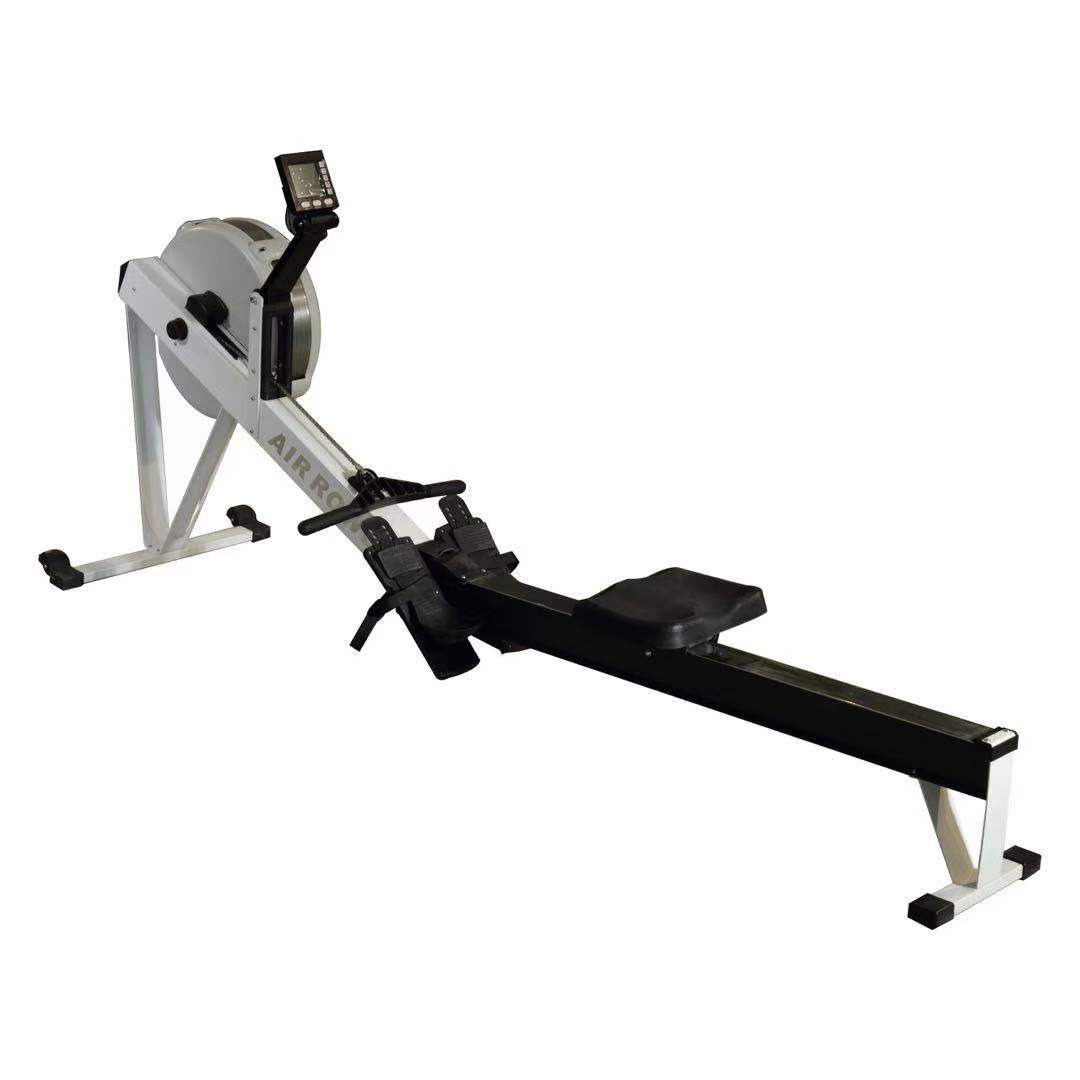
When shopping for fitness equipment, you will inevitably encounter a massive price disparity. You might see a sleek, compact rower for $400 and a rugged, heavy-duty model for $1,500.
To the untrained eye, they perform the same function: you pull the handle, you slide back, and you sweat. So, why the price gap?
The difference lies in the engineering. Commercial rowing machines are built for the abuse of a 24-hour gym, while home rowing machines are optimized for residential convenience. In this guide, we break down the critical differences to help you decide which tier of equipment belongs in your workout space.
1. Commercial Rowing Machines: The Workhorses
Commercial units are designed with one goal: Unfailing Durability. They are engineered to run for 8 to 12 hours a day, every day, accommodating users of all weights and intensity levels.
Design & Durability
Frame Construction: Typically made from heavy-gauge steel or anodized aluminum with welded joints. This prevents the rail from flexing during explosive sprints.
Components: They use nickel-plated steel chains (instead of nylon straps) and industrial sealed bearings. This significantly reduces the need for Rowing Machine Maintenance, as dirt and sweat rarely penetrate the internal mechanisms.
Monitor: The consoles are often self-powered (generating their own electricity) and feature advanced calibration for athletic competitions.
Best For: Garage gyms, heavy-weight users (250lbs+), and households with multiple daily users.
2. Home Rowing Machines: Smart & Space-Saving
Home models are designed for the reality of living spaces. They prioritize silence, aesthetics, and storage over brute strength.
Design & Features
Footprint: Many of the Best Rowing Machines for homes feature foldable rails or can be stored upright against a wall, taking up no more space than a dining chair.
Resistance: They often favor Magnetic Resistance or water tanks over air fans. Why? Because they are quieter. You can row in the living room while watching TV without turning the volume up to max.
Aesthetics: Home models, especially water rowers, often use wood or sleek plastics to blend in with home decor.
Best For: Apartments, shared living spaces, and individuals rowing 3-5 times per week.
3. The Decision Matrix: Frequency and Space
How do you choose? It usually comes down to two factors: How often will it be used, and where will you put it?
The "Volume" Rule
Commercial: If your machine will be used by 3+ people daily, or if you plan to do intense CrossFit-style intervals where you slam the handle, you need the reinforced structure of a commercial unit.
Home: If you are the sole user doing steady-state cardio for 30 minutes a day, a commercial machine might be "overkill." A high-quality home model will serve you perfectly for years.
Space Constraints
Commercial machines have a long, fixed footprint (often 9 feet / 2.7 meters). Once you place them, they are heavy and hard to move. Home machines are lighter and designed for mobility.
Quick Comparison Table
Feature | Home Rowing Machine | Commercial Rowing Machine |
Usage Limit | 1-2 Hours / Day | 12+ Hours / Day |
Max User Weight | 220 - 265 lbs | 350 - 500 lbs |
Drive System | Nylon Strap (Quiet) | Steel Chain (Durable) |
Storage | Foldable / Upright | Fixed / Heavy |
Maintenance | Occasional tightening | Low / Maintenance-free |

4. Budget and Return on Investment (ROI)
Price is the biggest friction point. However, looking at the "Total Cost of Ownership" is crucial.
The "Buy Nice or Buy Twice" Philosophy
Commercial ($900 - $2,000+): High upfront cost, but these machines hold their resale value incredibly well. If you decide to sell it in 5 years, you can often recoup 50-60% of the cost.
Home ($300 - $800): Lower entry point. However, budget models may require replacement parts (bungees, rollers) sooner. If you are a heavy user, a cheap machine may wear out in 2 years, forcing you to buy a second one.
Conclusion
The "right" rower is the one that fits your lifestyle.
Choose a Commercial Model if you want a "tank" that will last a lifetime and can handle rigorous abuse.
Choose a Home Model if you need a quiet, space-saving solution that fits into your daily routine without dominating the room.
Whichever path you choose, ensure you buy from a reputable supplier who offers parts and support.
Ready to choose? Compare the specifications of our residential and club-grade models in our full Rowing Machines Catalog to find your perfect match.
Frequently Asked Questions (FAQ)
Q: Can I use a commercial rower in an apartment?
A: Yes, but be mindful of the noise. Commercial air rowers generate wind noise that can travel through walls. If you live in an apartment, a commercial-grade Water or Magnetic Rower might be a better choice.
Q: Do commercial machines require less maintenance?
A: Generally, yes. Because they use industrial components, Rowing Machine Maintenance is less frequent. However, when parts do need replacing, they can be more expensive than home model parts.
Q: Why are commercial rowers so long?
A: To accommodate tall users. Commercial machines are designed to fit users up to 6'8" or taller, ensuring a full range of motion during the drive phase.
Q: Is a magnetic rower "commercial grade"?
A: Some are. While air rowers are the standard in gyms, high-end magnetic rowers with heavy flywheels are increasingly used in boutique fitness studios for their smooth, silent operation.
 注: 建议图片大小150px*50px