Running remains one of the most effective forms of exercise for cardiovascular health and weight management. Consequently, the treadmill is the heartbeat of any gym, whether it is a garage setup or a sprawling commercial facility.
However, buying a treadmill is a significant financial commitment. With hundreds of models flooding the market—ranging from budget foldables to high-end commercial treadmills—making the right choice can be overwhelming.
This guide cuts through the marketing noise. We will break down the essential technical specifications, types, and features you need to understand to make an educated purchase that fits your goals and budget.
1. Understanding the Basic Types of Treadmills
Before worrying about screens and bluetooth, you must select the right chassis type for your intended use.
Motorized Treadmills
These are the industry standard. Powered by an electric motor, the belt moves at a speed you select.
Best for: Consistent pacing, endurance training, and users who want programmed workouts.
Commercial vs. Home: Commercial units typically use AC motors (for long-duration durability), while home units use DC motors (quieter operation).
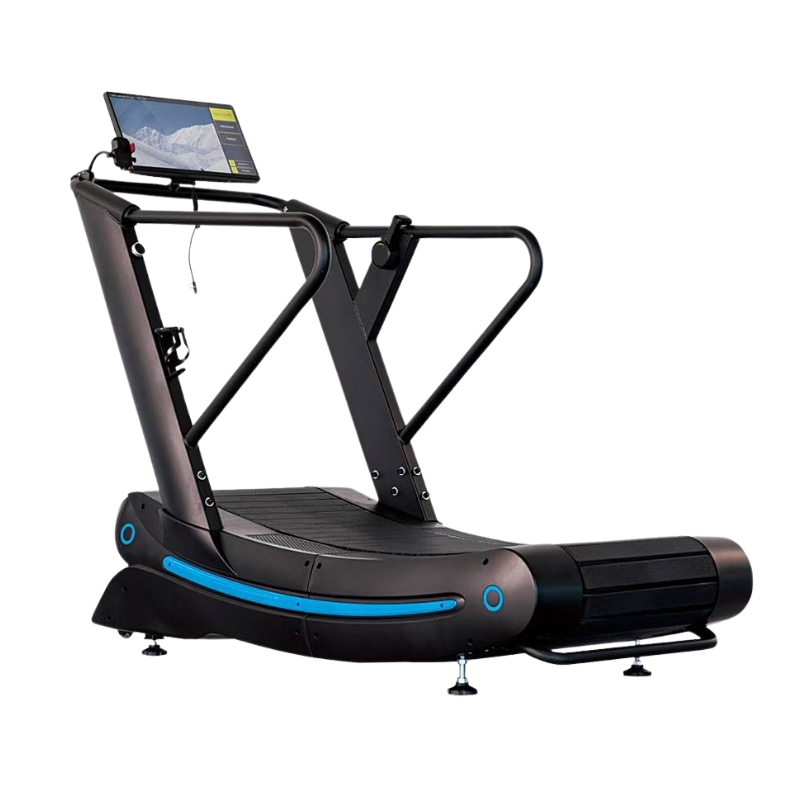
Curved (Non-Motorized) Treadmills
A favorite in athletic performance centers. These have a concave deck and no motor; your stride powers the belt.
Manual Flat Treadmills
Entry-level machines where the belt moves only when you push it.
Browse the Collection: From heavy-duty motorized units to performance curved decks, explore our full range of Treadmills here.
2. Key Features and Specifications: What Matters?
To ensure you are buying one of the best treadmills for your needs, pay attention to these four critical specs.
Motor Power: CHP is King
Don't be fooled by "Peak Horsepower" (PHP). You need to look for Continuous Horsepower (CHP). This measures what the motor can sustain over a long workout without overheating.
Walkers: 2.0 CHP is sufficient.
Runners: Look for at least 3.0 CHP.
Commercial Gyms: 4.0 to 5.0 CHP is standard to handle 24/7 usage.
Belt Size (Running Surface)
The deck size dictates comfort and safety.
Width: 20 inches is the standard. 22 inches is preferred for commercial gyms to accommodate larger users.
Length: If you are over 6 feet tall or plan to sprint, you need a belt length of at least 60 inches (152 cm). Shorter belts (50-55 inches) are fine for walking but risky for running.
Incline and Decline Capabilities
Incline training is efficient. Walking at a steep incline burns fat without the high impact of running.
Most commercial units offer 0-15% incline.
Some premium models offer decline (-3%) to simulate running downhill, which conditions the quadriceps and prepares athletes for real-world terrain.
Display and Connectivity
Do you want a simple "Get on and Go" experience, or immersive training?
LED Consoles: Durable, easy to read, and low maintenance. Ideal for high-traffic gyms.
Touchscreens: Offer entertainment apps and virtual trails. Great for motivation but requires more care.
3. Considering Your Budget and Value
Price is always a factor, but in fitness equipment, you get what you pay for.
The "Total Cost of Ownership"
A cheap $500 treadmill might seem like a bargain, but if the motor burns out in 12 months, it becomes expensive trash.
Entry-Level: Good for light walking.
Mid-Range: Suitable for daily jogging.
Commercial Grade: Higher upfront cost, but built with heavy-gauge steel and maintenance-free belts. These can last 10+ years.
For gym owners, investing in commercial treadmills reduces "Out of Order" signs, which directly correlates to member retention.
4. User Reviews and Brand Reputation
Before clicking "buy," do your homework on the manufacturer.
Analyzing Reviews
Look beyond the star rating. Look for comments on:
Assembly: Was it easy to build?
Stability: Does it wobble at high speeds?
Service: How did the company handle shipping damages?
Warranty: The Trust Signal
A warranty is the manufacturer's vote of confidence in their product. A solid warranty should offer:
5. Where to Buy: Online vs. In-Store
Buying Online
Pros: Better prices, direct access to manufacturer specs, and easy comparison.
Cons: You can't test the "feel" of the cushion.
Tip: Stick to reputable suppliers who offer detailed spec sheets and responsive customer service.
Buying In-Store
Conclusion
Choosing the right treadmill is about balancing your fitness goals with the machine's capabilities. Whether you need a space-saving foldable unit for your apartment or a fleet of heavy-duty runners for your club, prioritizing Motor Power (CHP), Belt Size, and Build Quality will never steer you wrong.
Don't rush the decision. A quality treadmill is a long-term partner in your health journey.
Need expert advice?Visit our Treadmills Product Page to view detailed specifications of our commercial-grade equipment, or contact us today for a personalized quote.
Frequently Asked Questions (FAQ)
Q: How much space do I need for a treadmill?
A: Measure the machine's footprint, then add at least 2 feet of clearance on each side and 6 feet behind the machine for safety. This prevents injury if a user falls off the back.
Q: Is a curved treadmill better than a motorized one?
A: It depends on the goal. Curved treadmills engage more muscle groups (glutes/hamstrings) and burn more calories, but they are harder to use for long-distance endurance runs compared to motorized versions.
Q: What is the most important feature for heavy runners?
A: Cushioning and Frame Stability. Heavy runners need a deck with a shock-absorption system to protect joints, and a heavy steel frame that won't shake during use.
Q: Do I need a dedicated electrical circuit for my treadmill?
A: For powerful commercial treadmills (3.0 CHP and up), a dedicated circuit is highly recommended to prevent tripping breakers and to ensure the motor gets consistent power.
 注: 建议图片大小150px*50px


