
Evidence from the field
See the booth, the production line and the installed floor
A product photo shows a machine. A project view shows how equipment fits a room, how it is presented to buyers and how production is staged. This gallery brings those contexts together without publishing customer names, private layout files or unverified project claims.
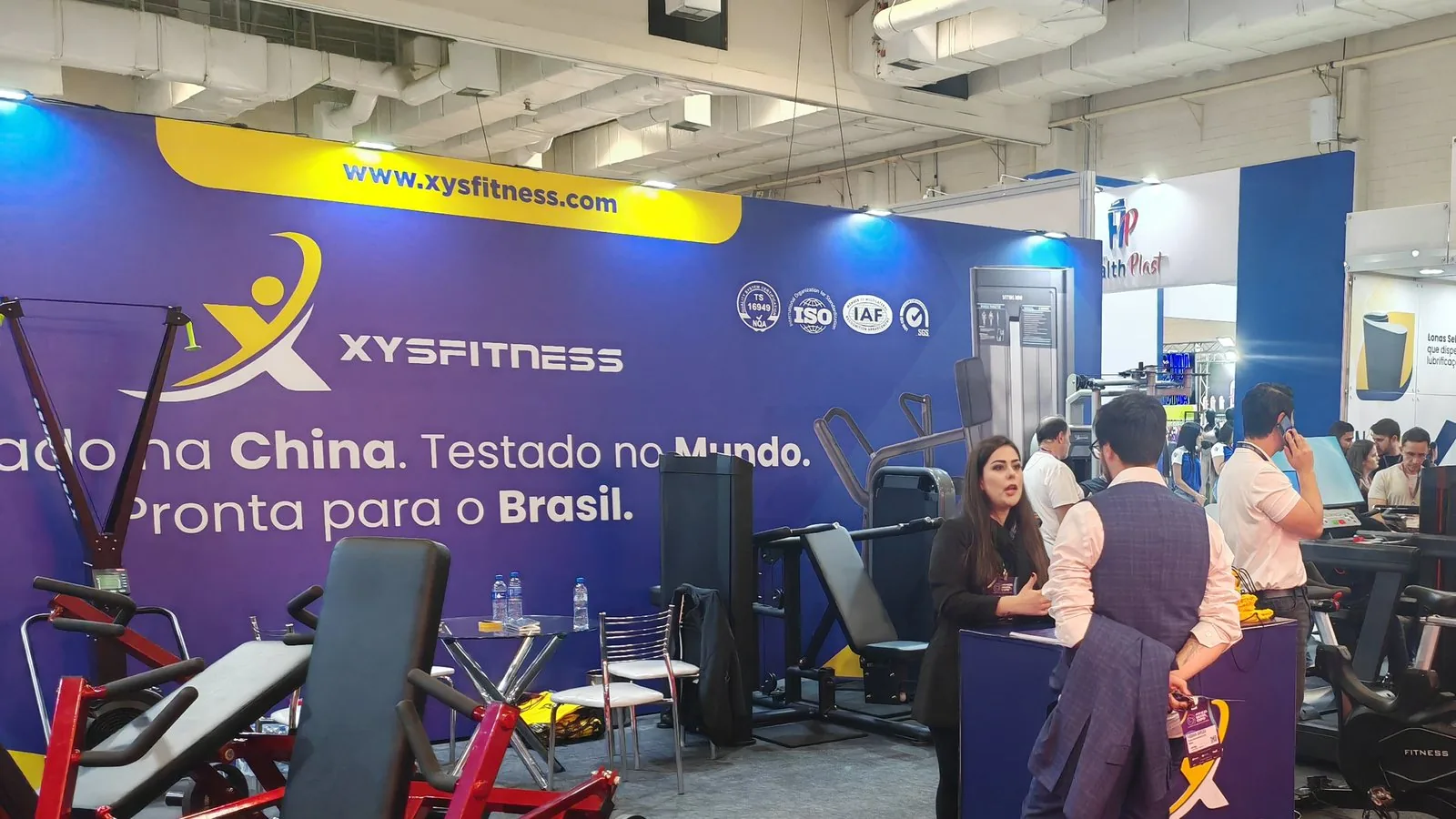
Trade-event evidence
Equipment presented to real buyers, not isolated in a studio
Trade events create a practical test: visitors can compare product families, inspect finishes and ask questions across cardio, strength and free-weight ranges.
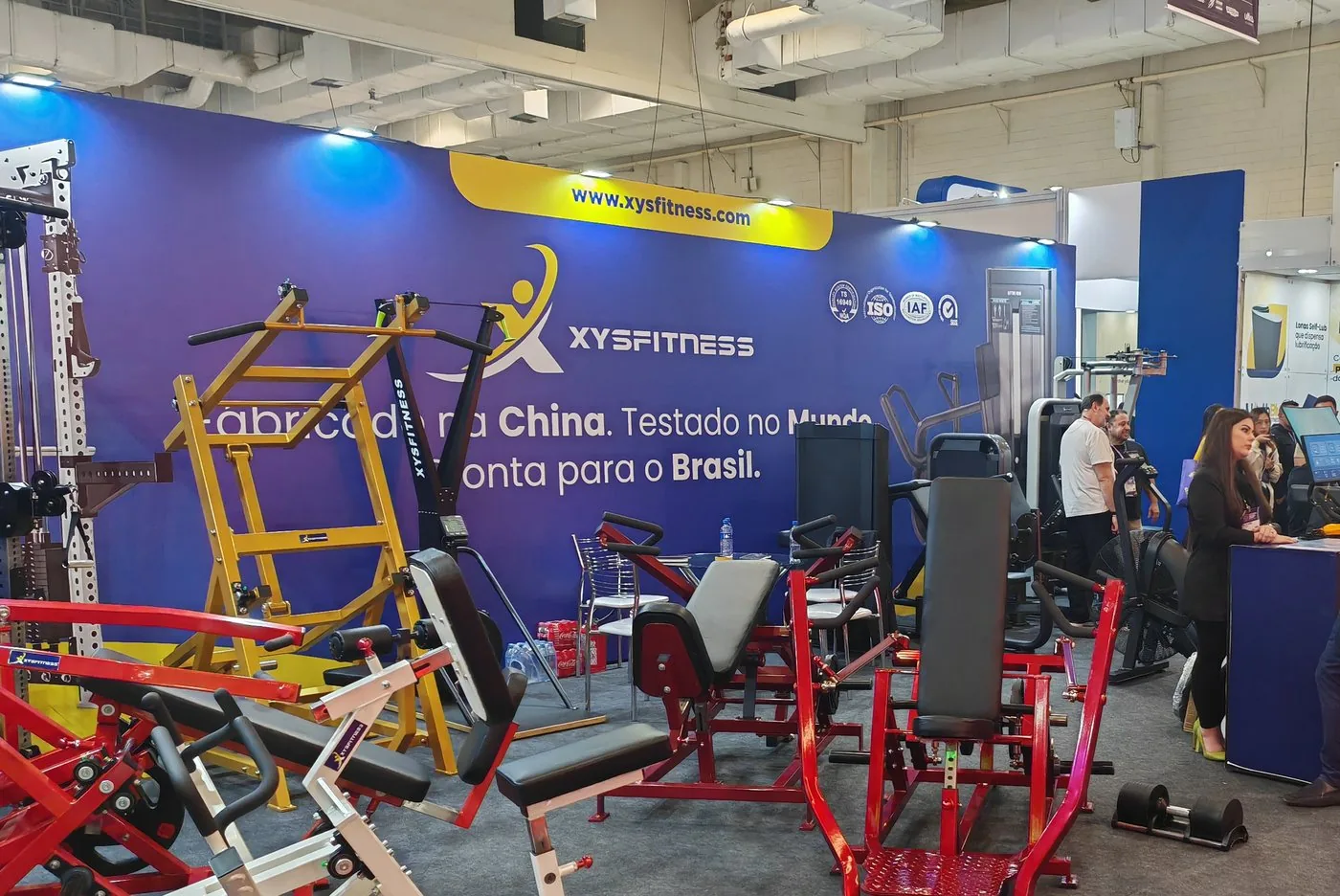
Product discussions at the booth
Visitors could review equipment in person and discuss configuration, finish and destination requirements. This documents event participation and product handling; it does not establish a sale, endorsement or current model availability.
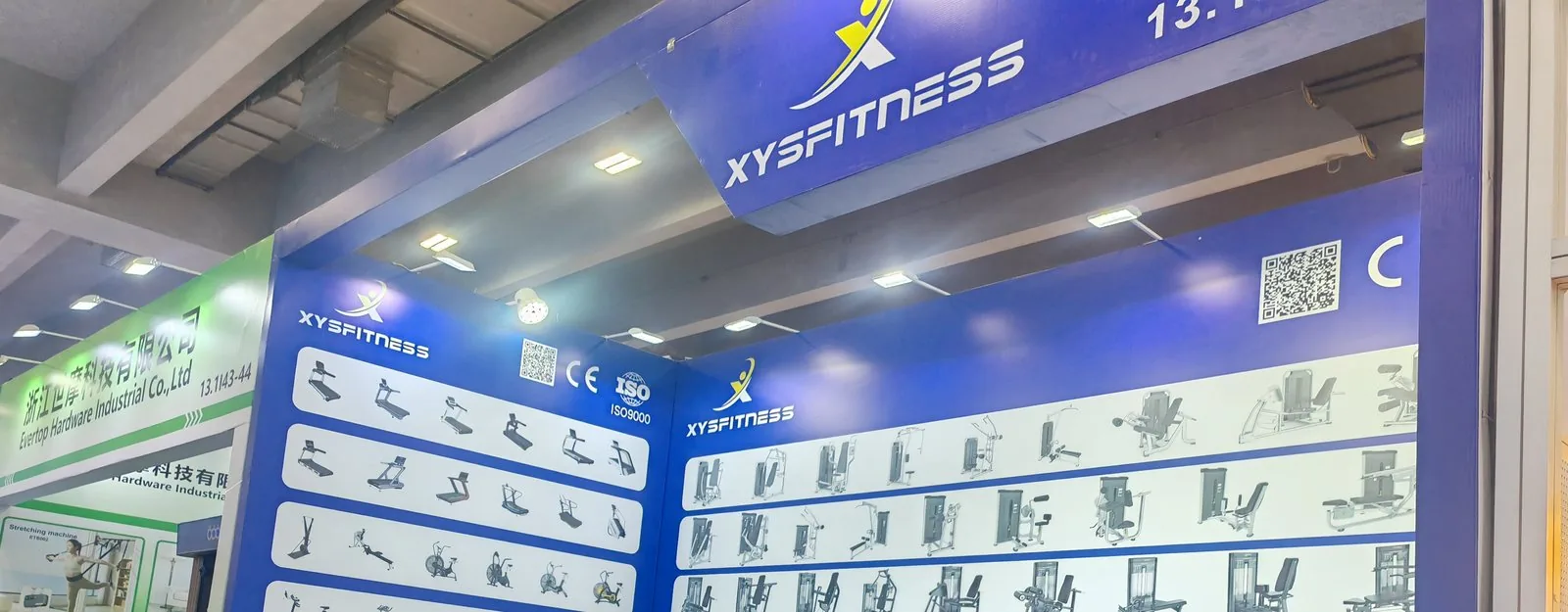
A visible product range
The product wall helped buyers compare equipment families before narrowing the conversation to a room, user profile and approved model list.
Installed project references
How the equipment reads in a finished training space
These images are supplied from project photography files. Customer names, locations and model schedules are intentionally omitted from this public page.
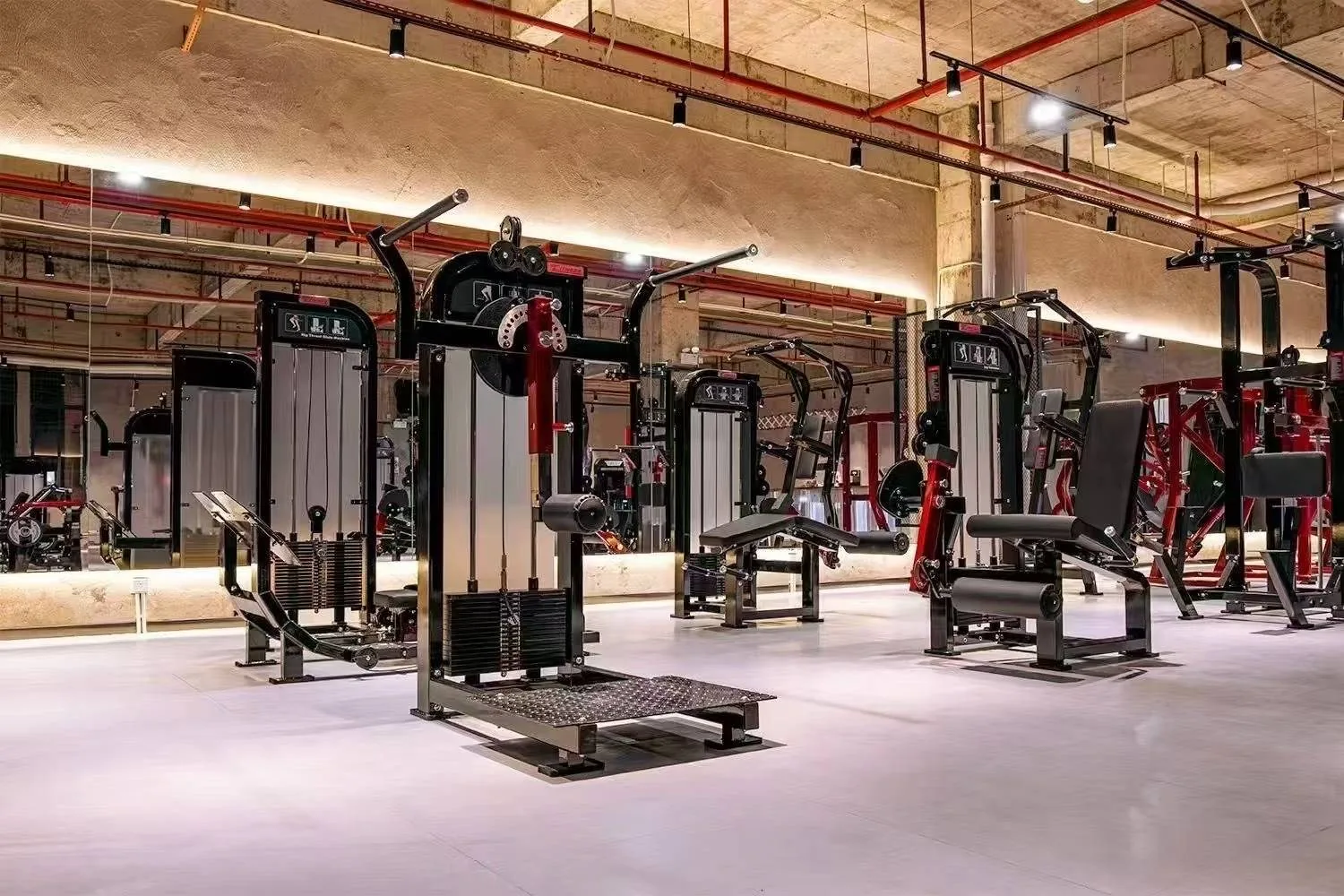
Selectorized equipment zone
A repeated machine layout with clear access between stations. The final mix still depends on room dimensions, expected throughput and the approved equipment schedule.
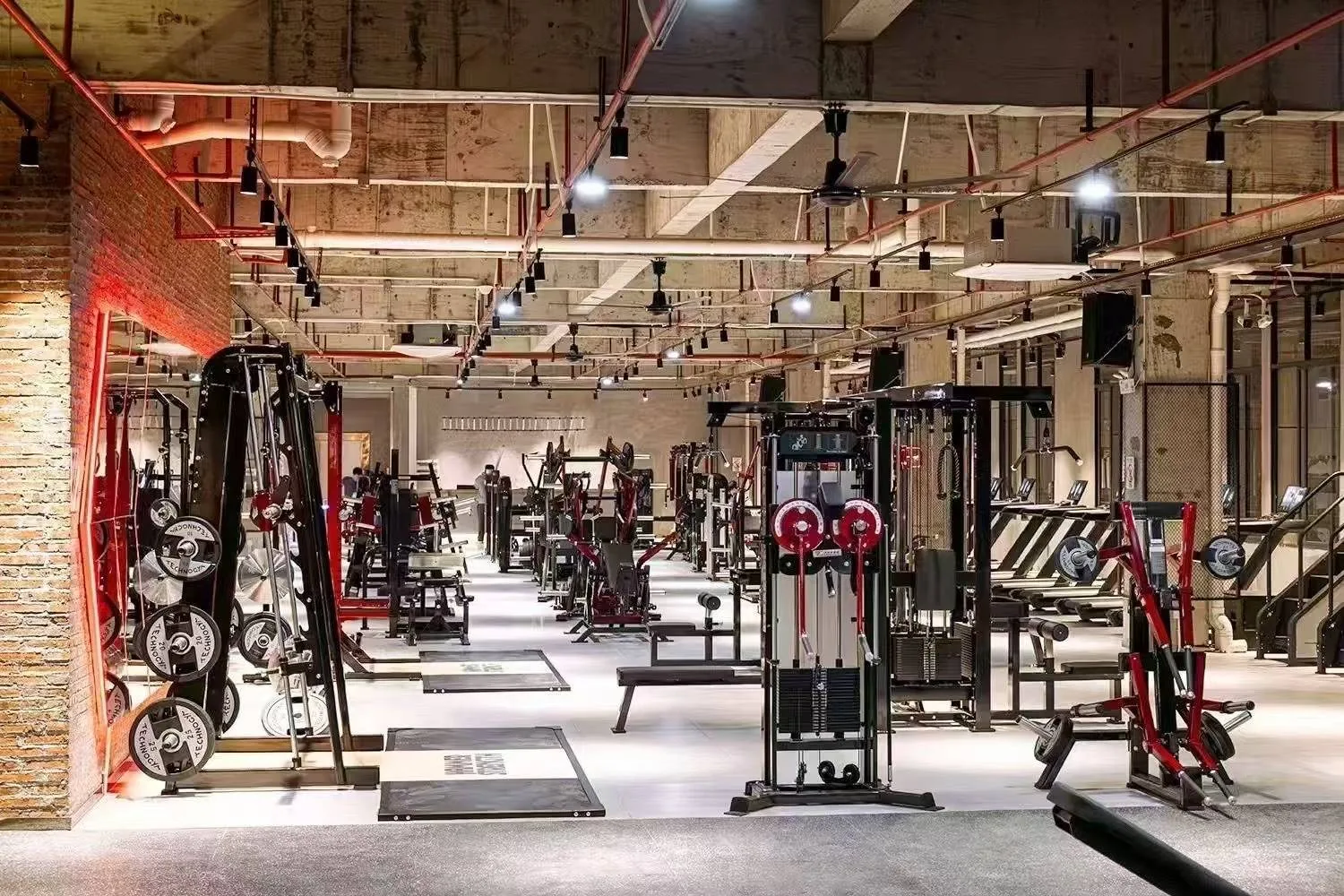
Racks, platforms and plate-loaded stations
The image shows how different strength families can share one floor. It is not a layout approval or a guarantee that every item shown remains available.
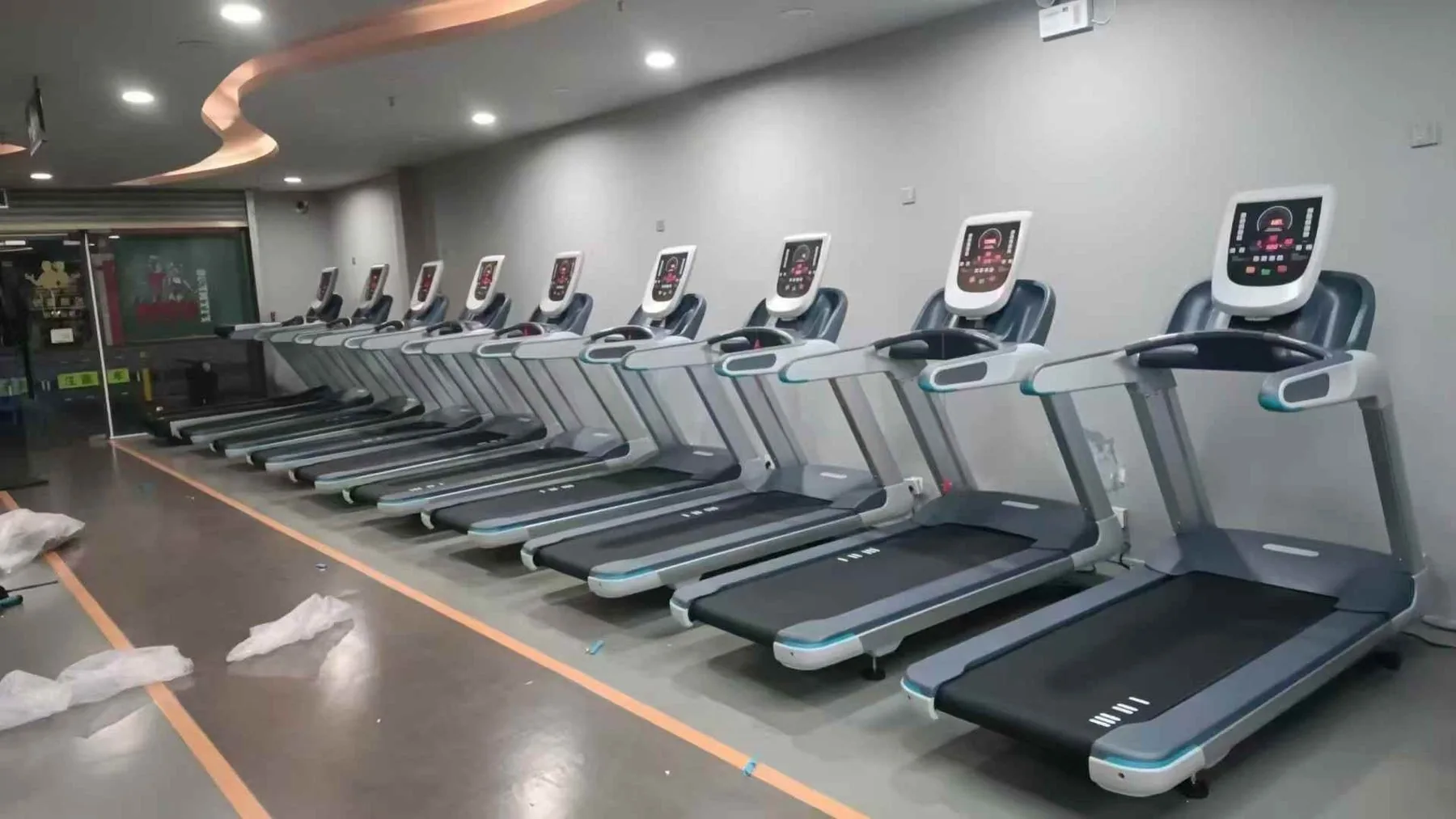
Treadmill installation reference
Cardio placement must still account for power, service access, circulation, noise and the operator’s maintenance plan.
Factory evidence
Production is staged before it becomes a shipment
Factory photography supports the production and handling context. It does not replace a model-specific inspection record, certificate or approved pre-shipment checklist.
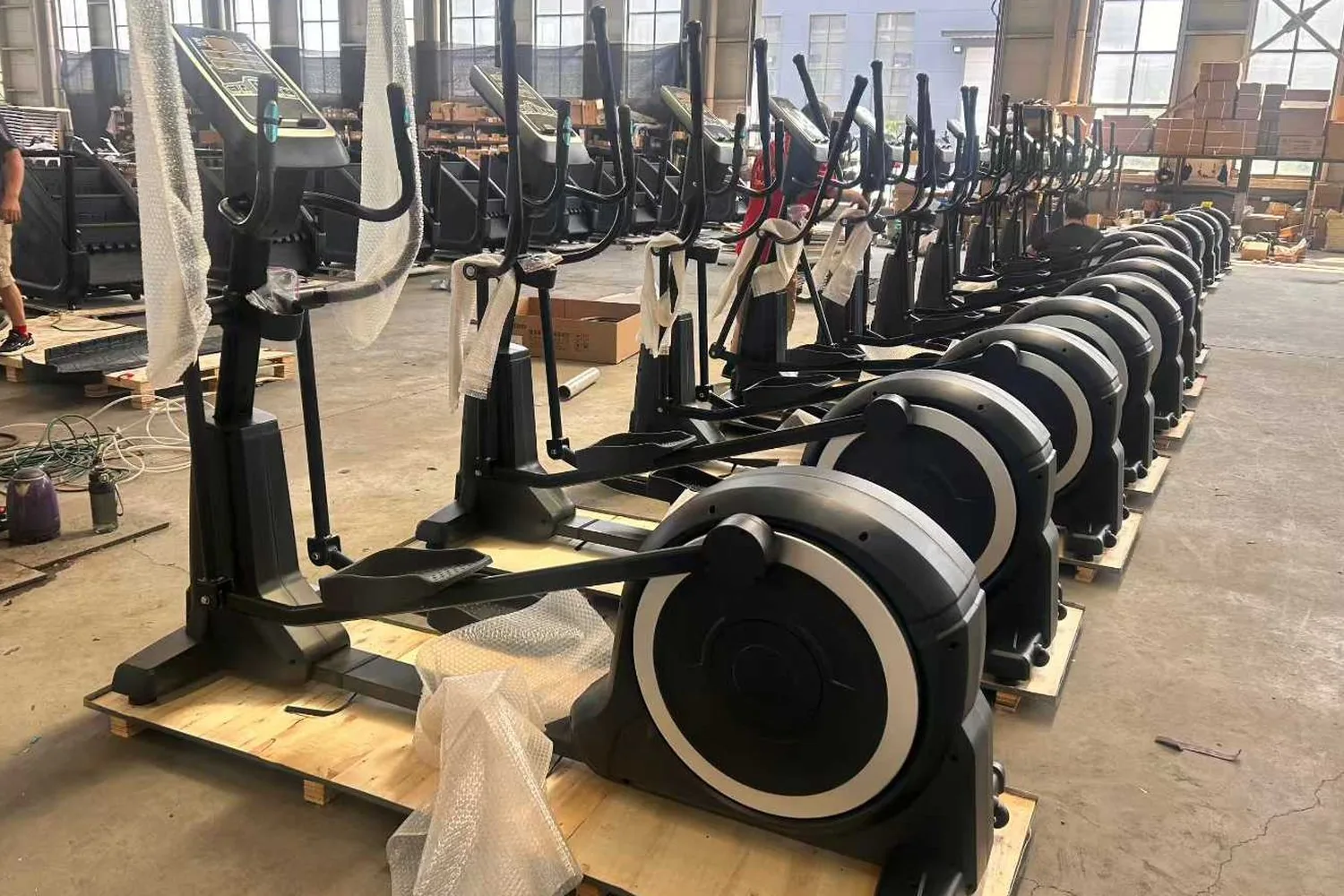
Commercial cardio equipment in production
Machines are staged for assembly and inspection. Use the factory page, audit report and model-specific documents when evaluating a specific order.
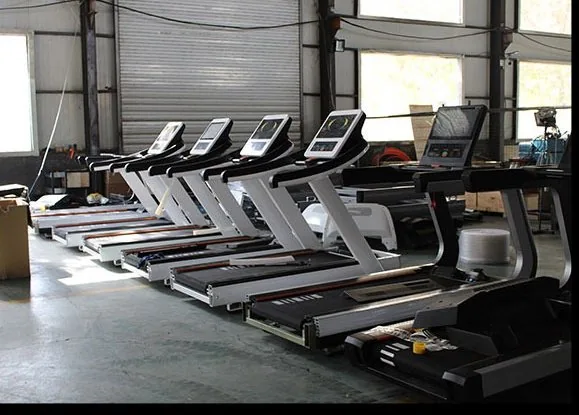
Checks before dispatch
The agreed specification, sample and inspection points should be tied to the actual order, not inferred from a general factory photo.
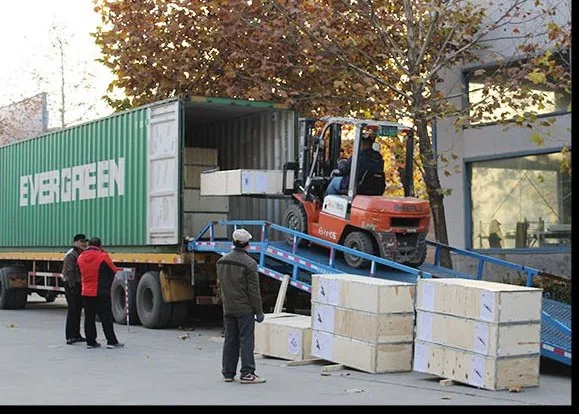
Packing and loading context
Packing method, carton marks, loading sequence and shipping terms are confirmed in the quotation and final packing plan.
Use the evidence correctly
What these photos can and cannot prove
They show operating context
Event and installation photos help a buyer judge scale, finish, room type and how equipment families may work together.
They do not replace documents
Certification, conformity scope, inspection results and warranty terms must be checked against the exact model and current documentation.
They do not replace a quotation
Model, quantity, options, packing, delivery, installation scope and exclusions are confirmed only in the reviewed quotation.
Ask for the next layer
What a buyer can request
- The model behind a project or event image
- Current specification and available configurations
- Finish, branding and private-label requirements
- Model-specific conformity or test documentation
- Packing, loading and delivery assumptions
- Customer names and private layouts are not published without permission.
- Some images show installations that may have changed after handover.
- Angle, lighting and optional equipment can make two rooms look different.
- A gallery image is a starting point for verification, not a substitute for it.
From reference to approved scope
Send the room, user profile and models you want to verify
We can match the request to the current product schedule, document scope and project-review questions.